
Date : March 2027
Location : Bali
Time : –
Introduction
Once a year, Bali falls almost completely silent. Roads empty, businesses close, lights are dimmed, and even the island’s international airport pauses its regular operations. This is Nyepi, the Balinese Hindu Day of Silence and the beginning of a new year in the Saka calendar. More than an unusual island-wide pause, Nyepi is a sacred time for reflection, purification, and renewal. From 6.00 am until 6.00 am the following morning, Balinese Hindus observe four forms of self-restraint known as *Catur Brata Penyepian*. The profound stillness contrasts with the colourful processions, offerings, and ceremonies that take place beforehand, creating one of Bali’s most meaningful cultural and spiritual experiences.
Historical Origins
Nyepi marks the beginning of the Saka New Year. The Saka era originated in the Indian subcontinent and begins in 78 CE, although its observance in Bali developed through the island’s own religious and cultural history.
Indian religious ideas and calendar systems reached the Indonesian archipelago through centuries of trade and cultural exchange. In Bali, these influences became intertwined with local beliefs, customary village life, and practices of ritual purification. The result was a distinctly Balinese observance centred on restoring balance and entering the new year in silence.
Nyepi follows the Saka calendar, which uses lunar and solar calculations. Its date changes each year but usually falls in March or April.
Mythology and Religious Significance
Nyepi invites people to begin the year through stillness rather than festivity. Its spiritual meaning centres on self-control, contemplation, purification, and harmony.
Balinese Hindu philosophy recognises a relationship between *bhuana alit*, the individual or microcosm, and *bhuana agung*, the wider universe or macrocosm. The ceremonies surrounding Nyepi seek to restore balance in both. Communities purify their surroundings, while individuals are encouraged to reflect upon their thoughts, actions, and intentions.
At the heart of Nyepi is *Catur Brata Penyepian*, the four disciplines of silence:
- Amati Geni: refraining from lighting fires and limiting lights and electricity
- Amati Karya: refraining from work and physical activity
- Amati Lelungan: refraining from travelling
- Amati Lelanguan: refraining from entertainment and indulgence
Some devotees also fast, pray, meditate, or remain completely silent. The way these disciplines are observed may vary according to health, family responsibilities, local custom, and religious guidance.
A popular story says the darkened and deserted island leads harmful spirits to believe Bali is empty. While widely repeated, this should not be considered the sole meaning of Nyepi. Its deeper religious purpose is to quieten external distractions, control personal desires, and begin the new year with greater awareness.
How the celebration Evolved
Nyepi remains rooted in Balinese Hindu practice, but its surrounding traditions have evolved. The growth of roads, electricity, broadcasting, aviation, and international tourism has made the collective stillness of the island even more remarkable.
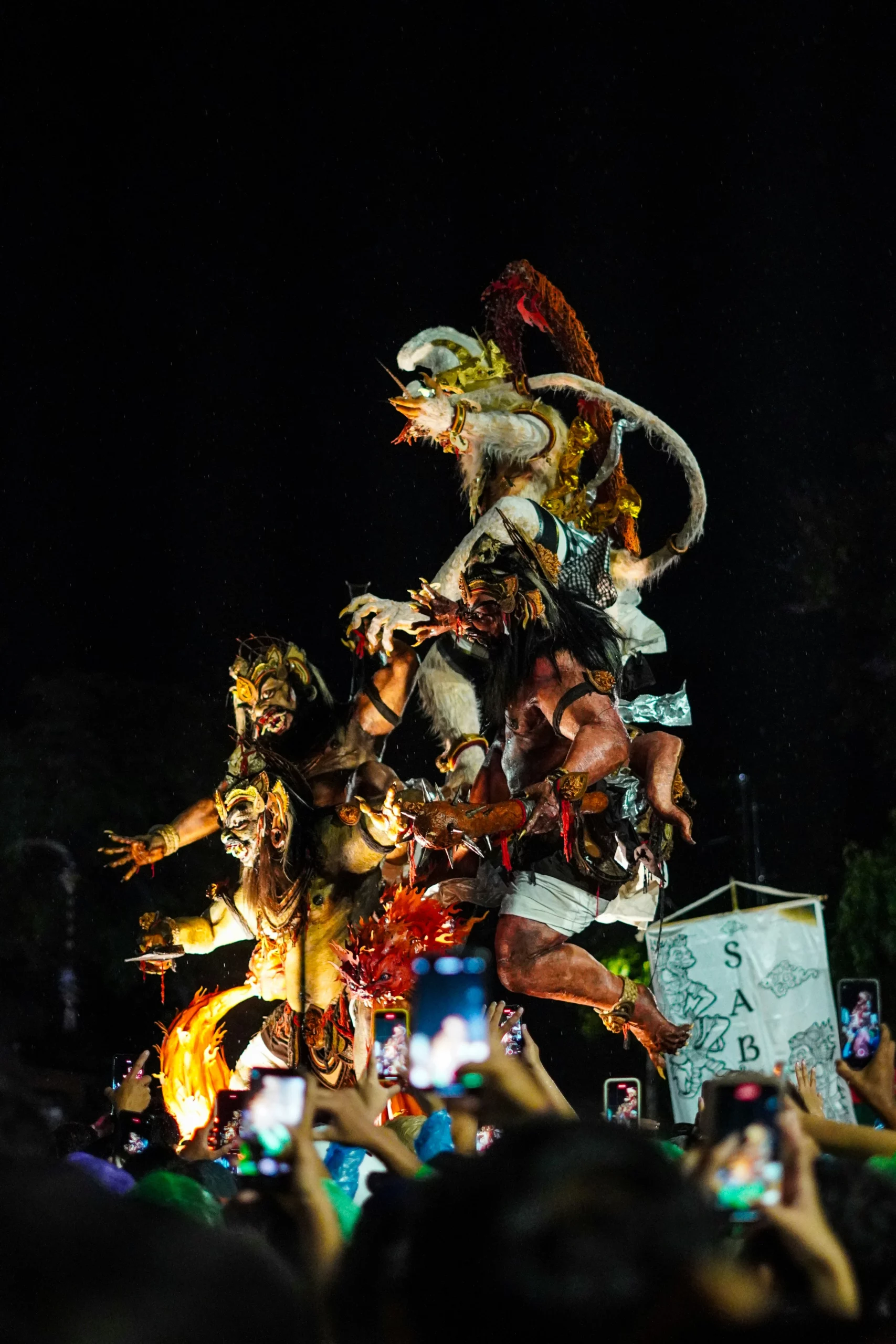
Ogoh-ogoh are a clear example of this evolution. These enormous effigies commonly represent *bhuta kala*, or disruptive and uncontrolled forces. Although they draw upon older spiritual concepts, the elaborate public parades familiar today are a relatively modern development. Village youth groups may spend weeks creating the figures, blending religious symbolism, artistic expression, and occasional social commentary.
Today, island-wide coordination allows Nyepi to be observed amid modern life. Transport stops, roads close, businesses suspend operations, and visitors remain inside their accommodation. Essential and emergency services continue under carefully controlled conditions.
How Nyepi Is Celebrated Today
Nyepi is the central day within a wider ceremonial sequence. Practices differ between villages, but the principal stages generally include:
Melasti
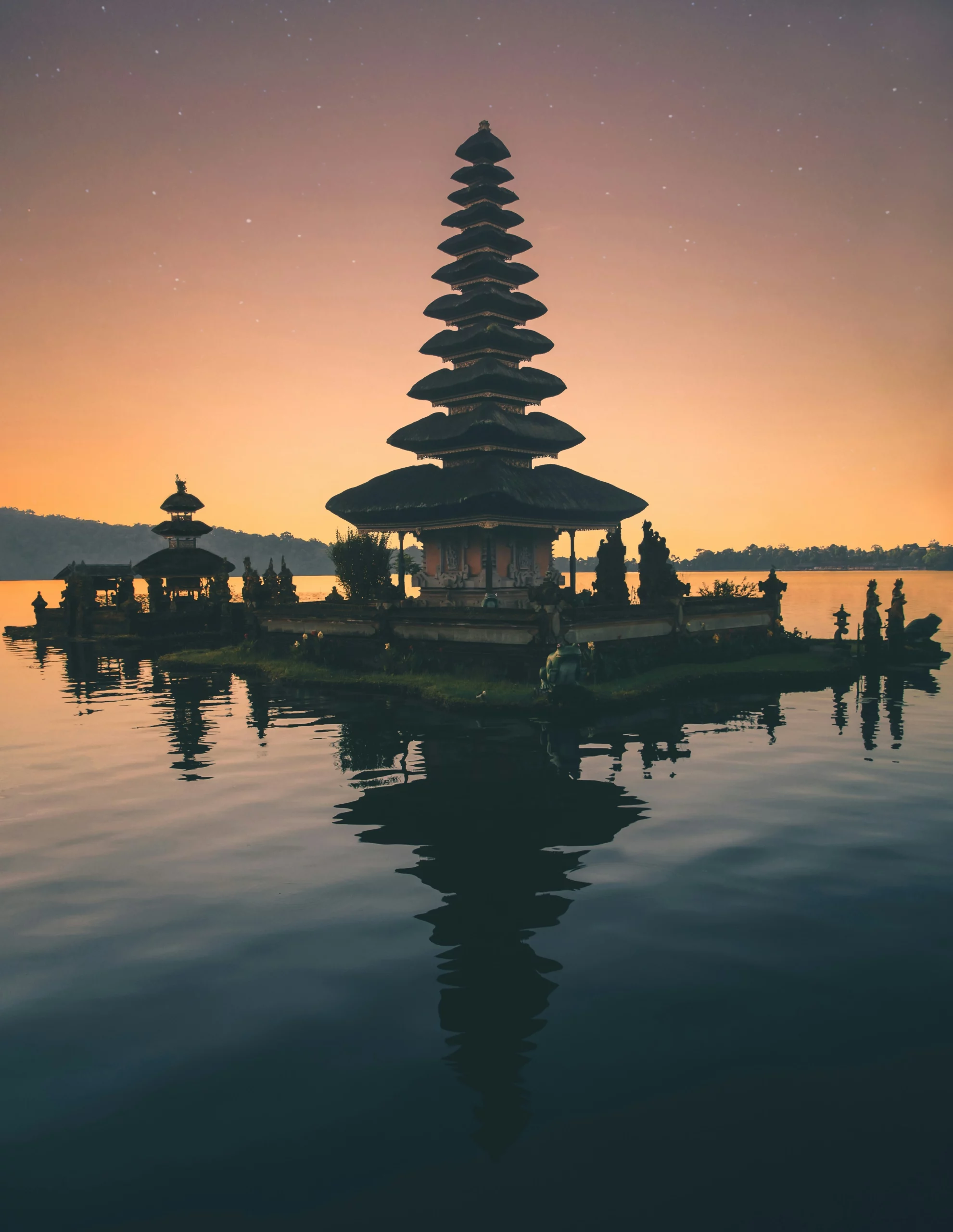
Several days before Nyepi, communities undertake *Melasti*, a purification ceremony held at the sea, a lake, or another sacred water source. Worshippers carry sacred temple objects in procession and gather for prayer, seeking purification for both the human and natural worlds.
Tawur Kesanga and Pangrupukan
On the day before Nyepi, offerings and ceremonies are conducted to restore balance between harmonious and disruptive forces. That evening, many communities hold ogoh-ogoh processions accompanied by music, fire, and excited crowds. The figures may later be burned, displayed, preserved, or dismantled according to local practice.
Nyepi or Sipeng
At approximately 6.00 am, the island enters *Sipeng*, the period of silence. Streets become empty, lights are kept off or concealed, entertainment stops, and people remain at home or inside their accommodation for 24 hours. Customary security officers known as *pecalang* help maintain order while supporting access for genuine emergencies.
Ngembak Geni
At 6.00 am the following morning, daily life gradually resumes. On *Ngembak Geni*, families and friends visit one another, seek forgiveness, renew relationships, and welcome the new year with reconciliation.
Traditions and Rituals
The sequence surrounding Nyepi creates a deliberate journey from activity to stillness and renewal. Melasti brings communities together through sacred water, prayer, offerings, music, and procession. Pangrupukan builds towards an energetic evening as ogoh-ogoh move through village streets.
Nyepi then reverses this atmosphere. Silence replaces music, darkness replaces fire, and stillness replaces movement. For observant Hindus, the day becomes a time for fasting, meditation, prayer, and personal reflection. When fires and lights return on Ngembak Geni, the new year begins with renewed relationships and intentions.
What Visitors can expect
Nyepi can be one of the most memorable experiences of a stay in Bali, but visitors must plan ahead and respect its sacred purpose. From 6.00 am until 6.00 am the following day, guests must remain within their hotel, resort, villa, or other accommodation. Walking on public roads, visiting beaches, changing hotels, and travelling to or from the airport are not permitted.
Hotels normally explain their arrangements in advance. Dining may operate with reduced service, and access to pools or outdoor spaces may be limited. Lights must remain dim and concealed after dark, while noise should be kept to a minimum.
At Tejaprana, the absence of traffic and everyday activity allows the natural surroundings to come forward. The sound of the forest becomes clearer, while the darkness can reveal a remarkable night sky. These moments are best experienced quietly, as part of the island’s collective reflection rather than as organised entertainment.
The evening before Nyepi is entirely different. Ogoh-ogoh parades can be crowded, energetic, and visually dramatic, with significant road closures. Visitors are welcome in many public areas, but access and photography may be restricted by individual villages.
Travelt Tips
- Check the Nyepi date before booking, as it changes every year.
- Do not schedule flights, transfers, ferry journeys, or hotel changes during the 24-hour closure.
- Arrive at your accommodation early, as ceremonies and processions may cause road closures beforehand.
- Ask your hotel about meals, permitted areas, medical assistance, and other arrangements.
- Purchase medicine and personal essentials before shops close.
- Keep lights dim, close curtains after dark, and avoid loud music or gatherings.
- Do not leave your accommodation to walk, exercise, or photograph the empty roads.
- Observe ceremonies respectfully, wear modest clothing, and avoid blocking processions or worshippers.
- Follow instructions from hotel staff, village authorities, and *pecalang*.
Interesting Facts
- Bali’s airport pauses regular operations.
- I Gusti Ngurah Rai International Airport normally closes to routine passenger flights during Nyepi.
- Nyepi begins in the morning.
- The period of silence generally runs from 6.00 am until 6.00 am the following day rather than beginning at midnight.
- Bali uses more than one ceremonial calendar.
- Nyepi follows the Saka calendar, while holy days such as Galungan and Kuningan follow the 210-day Pawukon calendar.
Conclusion
Nyepi reveals a side of Bali that cannot be understood through scenery alone. It is a collective act of restraint that creates space for purification, reflection, and renewal. The ceremonies leading up to it acknowledge the movement and imbalances of life through water, offerings, sound, and spectacular forms. Silence then turns attention inward. When fires are lit again on Ngembak Geni, the new year begins with reconciliation and renewed intention. For visitors who approach it respectfully, Nyepi offers more than a rare experience of quiet. It provides a meaningful glimpse into the Balinese pursuit of harmony between the individual, the community, nature, and the divine.
Sources Checked
- Bali Provincial Government, “Hari Suci Nyepi”: https://ceraken.baliprov.go.id/detail/hari-suci-nyepi-1744696661
- Bali Provincial Government, Joint Guidance for Nyepi Saka 1948: https://bmc.baliprov.go.id/news/title/seruan-bersama-tentang-pelaksanaan-hari-suci-nyepi-tahun-baru-caka-1948-tahun-2026
- Indonesia Travel, “The Serenity of Nyepi Day in Bali”: https://www.indonesia.travel/gb/en/travel-ideas/culture/the-serenity-of-nyepi-day-in-bali-activities-to-enjoy
- NOW! Bali, “What Is Nyepi? Understanding Bali’s Day of Silence”: https://www.nowbali.co.id/nyepi-day-of-silence-and-the-caka-calendar/