
Date : November 2027
Location : Bali
Time : –
Introduction
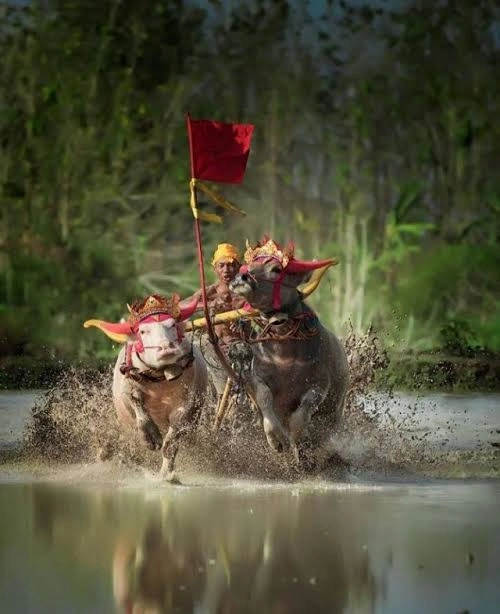
In the early morning light of West Bali, pairs of decorated buffalo thunder along a dirt track while a jockey balances behind them on a small wooden cart. This is Makepung, Jembrana’s celebrated buffalo racing tradition and one of the most distinctive expressions of Bali’s agricultural heritage. Born from the work and friendly competition of farming communities, Makepung has developed into an organised sport involving specialist buffalo, skilled jockeys, team rivalries, music, and considerable local pride. The name is connected to the idea of chasing or pursuing. Although far removed from the temple ceremonies for which Bali is often known, Makepung reveals another side of the island: energetic, rural, competitive, and closely tied to the rice fields of the west.
Historical Origins
Makepung emerged from the farming life of Jembrana Regency. Buffalo were traditionally used to plough and level wet rice fields before planting. Farmers working together would test the strength and speed of their animals, turning demanding agricultural labour into spirited competition.
The tradition is commonly said to have taken shape in the 1930s. Its earliest races took place in muddy fields using a lampit, the wooden levelling implement pulled behind the buffalo. This form survives as Makepung Lampit, in which jockeys race through wet agricultural ground.
During the twentieth century, Makepung increasingly moved from rice fields to dry tracks. The lampit was replaced by a small, lightweight cart, and organised teams, rules, and competition series developed. What began as farmers’ recreation became a defining symbol of Jembrana, now proudly known as Bumi Makepung, the land of Makepung.
In 2013, Makepung was officially recognised by Indonesia as an element of intangible cultural heritage associated with Jembrana.
Mythology or Religious Significance
Makepung is not based upon one central myth or religious narrative. Its significance comes primarily from agricultural life, cooperation, skill, and celebration following work in the rice fields.
Like many Balinese traditions, it can still carry ceremonial and spiritual elements. Owners may prepare their buffalo with care, seek blessings, and observe customary practices before a major race. The animals are valued not only for speed but also as sources of family and community pride.
The tradition expresses gratitude for agricultural abundance and preserves knowledge connected to buffalo husbandry. It also celebrates the partnership between people, animals, and the land. These relationships remain important even as many competitors are no longer full-time farmers and the races take place on purpose-built tracks.
How the Celebration Evolved
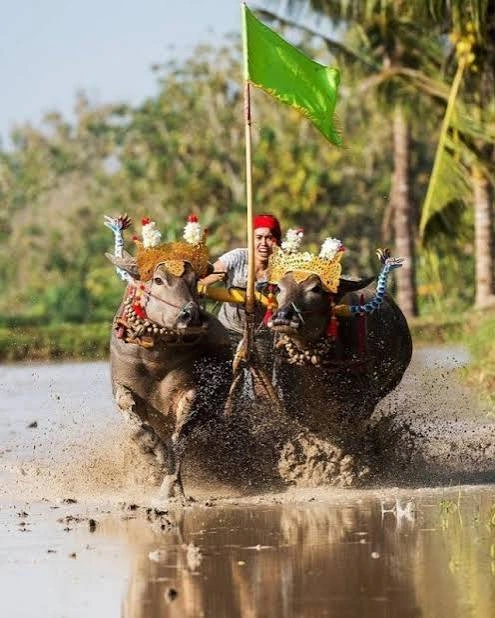
The move from wet fields to dry circuits transformed Makepung into a faster and more organised spectacle. Jockeys now stand on small carts behind pairs of buffalo, racing one team at a time around a track rather than starting side by side.
Jembrana’s competitors became associated with two broad alliances traditionally identified by coloured flags. The western and eastern sides of the Ijo Gading River developed a friendly rivalry that gives larger competitions an added sense of identity.
Race buffalo, known locally as kerbau pepadu, are trained and decorated for competition. Their ornamental headpieces and colourful accessories create a striking combination of strength and artistry. Major events may also include jegog, Jembrana’s powerful bamboo music, adding a distinctive regional sound.
Today, Makepung includes local race series and important cup competitions. Schedules, venues, and formats can change each year, so visitors should not rely on an old calendar when planning a journey.
How It Is Celebrated Today
Makepung races are generally held on Sunday mornings at tracks around Jembrana. Events often begin early, before the heat becomes intense. Teams arrive with their buffalo, carts, handlers, and supporters, turning the racing area into a lively meeting place.
Each pair runs with a jockey standing on the cart and controlling the team at speed. The scoring system is unusual because teams may begin with a set distance between them. Victory can depend on whether the pursuing team closes the gap or the leading team increases it, according to the rules used by the organisers.
Between heats, buffalo are rested, cooled, decorated, and prepared by their handlers. Larger events may include formal processions, music, presentations, and trophies. The atmosphere combines serious competition with reunion and shared regional pride.
Makepung Lampit offers a closer connection to the tradition’s agricultural origin. Held in wet fields using a levelling board rather than a wheeled cart, it emphasises balance, control, and the dramatic movement of buffalo through mud and water.
Traditions and Rituals
Preparing a Makepung team requires long-term care. Owners train the buffalo as a pair so that they respond together, maintain pace, and follow the jockey’s direction. Their health, strength, diet, and temperament all influence performance.
Before racing, the buffalo may be adorned with colourful cloth, bells, and an ornate headpiece commonly called rumbing. Decoration is not merely an afterthought. It reflects pride in the animals and contributes to the visual identity of the team.
Jockeys require courage, balance, and detailed knowledge of their buffalo. Handlers and family members support them before and after each heat. Although spectators see a brief burst of speed, every race represents extensive preparation by a wider group.
Animal welfare is an important consideration in understanding modern Makepung. Visitors may see traditional methods of urging the buffalo that differ from their own expectations. Event standards and practices continue to be discussed and developed, and spectators can make informed choices about the events they support.
What Visitors Can Expect
Makepung is very different from the ceremonial atmosphere of central Bali. Expect an early start, rural surroundings, dust or mud, powerful animals, loud encouragement, and rapid bursts of action.
Jembrana lies in western Bali, several hours by road from Ubud depending on traffic and the venue. Travellers should normally leave before dawn or stay overnight in West Bali. Race grounds may offer limited shade, seating, signage, and visitor facilities.
The schedule can be fluid. Weather, track conditions, ceremonial obligations, and organisational decisions may affect start times. Local guidance is particularly valuable. Tejaprana guests interested in attending should confirm current arrangements well in advance rather than treating Makepung as a fixed daily attraction.
Travel Tips
- Confirm the current date and venue through an official Jembrana source or trusted local contact.
- Leave very early or consider staying overnight in West Bali.
- Bring sun protection, drinking water, suitable footwear, and clothing that can tolerate dust or mud.
- Stay within spectator areas and keep well away from the racing track.
- Never approach or touch a buffalo without the handler’s permission.
- Use a zoom lens rather than moving into the path of animals for photographs.
- Expect limited facilities and carry cash for local purchases.
- Avoid flash photography near animals and follow all organiser instructions.
- Be prepared for changes caused by weather or track conditions.
Interesting Facts
- Makepung has two main forms. Dry-track racing uses a small cart, while Makepung Lampit preserves the older style of racing through wet rice fields.
- The buffalo race in pairs. Training them to move together is as important as the speed of either individual animal.
- Jembrana identifies strongly with the tradition. The regency is widely known as Bumi Makepung, the land of Makepung.
- The tradition is nationally recognised. Makepung entered Indonesia’s intangible cultural heritage register in 2013.
Conclusion
Makepung carries the energy of Jembrana’s rice fields into a living community sport. Its decorated buffalo, daring jockeys, and team rivalries are exciting to watch, but the tradition’s deeper value lies in the agricultural knowledge and regional identity it preserves. From muddy Makepung Lampit to organised dry-track competitions, it tells the story of farmers transforming work into fellowship and friendly rivalry. For travellers willing to journey beyond Bali’s familiar routes, Makepung offers a vivid encounter with the character of the west: proud, spirited, and inseparable from the land that created it.
Sources Checked
- Indonesian Intangible Cultural Heritage Register, “Makepung”: https://budaya.data.kemdikbud.go.id/wbtb/objek/AA000612
- Jembrana Regency Tourism and Culture Office profile, 2026: https://satudata.jembranakab.go.id/download_pub.php?id=62
- Bali Provincial Tourism Office, “Makepung Governor Cup”: https://disparda.baliprov.go.id/makepung-gubernur-cup-2019/2019/06/
- Jembrana Regency Government: https://jembranakab.go.id/