
Date : August 2027
Location : Bali
Time : –
Introduction
When Bali’s dry season winds strengthen, the sky above the island’s southern coast can fill with immense shapes. Fish, curved leaves and long tailed creatures rise from open fields while teams call instructions beneath them and gamelan music carries across the ground. The Bali Kite Festival grows from a much wider seasonal passion for kite flying, bringing village based teams together in spirited competition. Traditionally associated with gratitude, agriculture and the relationship between earth and sky, Balinese kites are also feats of design and cooperation. The best known gatherings have taken place around Padang Galak near Sanur, but dates and locations can change according to wind, permits and local organisation. Visitors should confirm details before setting out.
Historical Origins
Kite flying in Bali began long before the modern organised festival. Simple kites could be made from leaves and flown by children or farmers in open fields after agricultural work eased and dry season winds arrived. Over generations, bamboo framed designs became larger and more specialised.
The activity developed into a communal undertaking. Banjar neighbourhoods and youth associations formed kite groups known as sekaa layangan. Members pooled skills to design, build, transport, launch and control increasingly ambitious kites.
Formal competitions gave this seasonal tradition a public stage. The Bali Kite Festival became the best known expression, but it remains part of a broader culture visible in villages and fields throughout the windy months.
Mythology or Religious Significance
Balinese kite flying is often described as carrying gratitude and prayers towards the heavens, particularly hopes for agricultural abundance. This meaning reflects the close connection between seasonal winds, harvested or resting fields and village life.
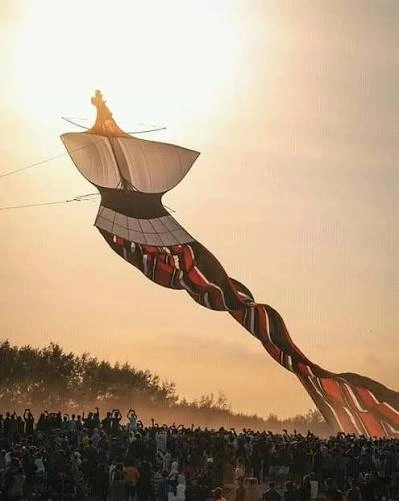
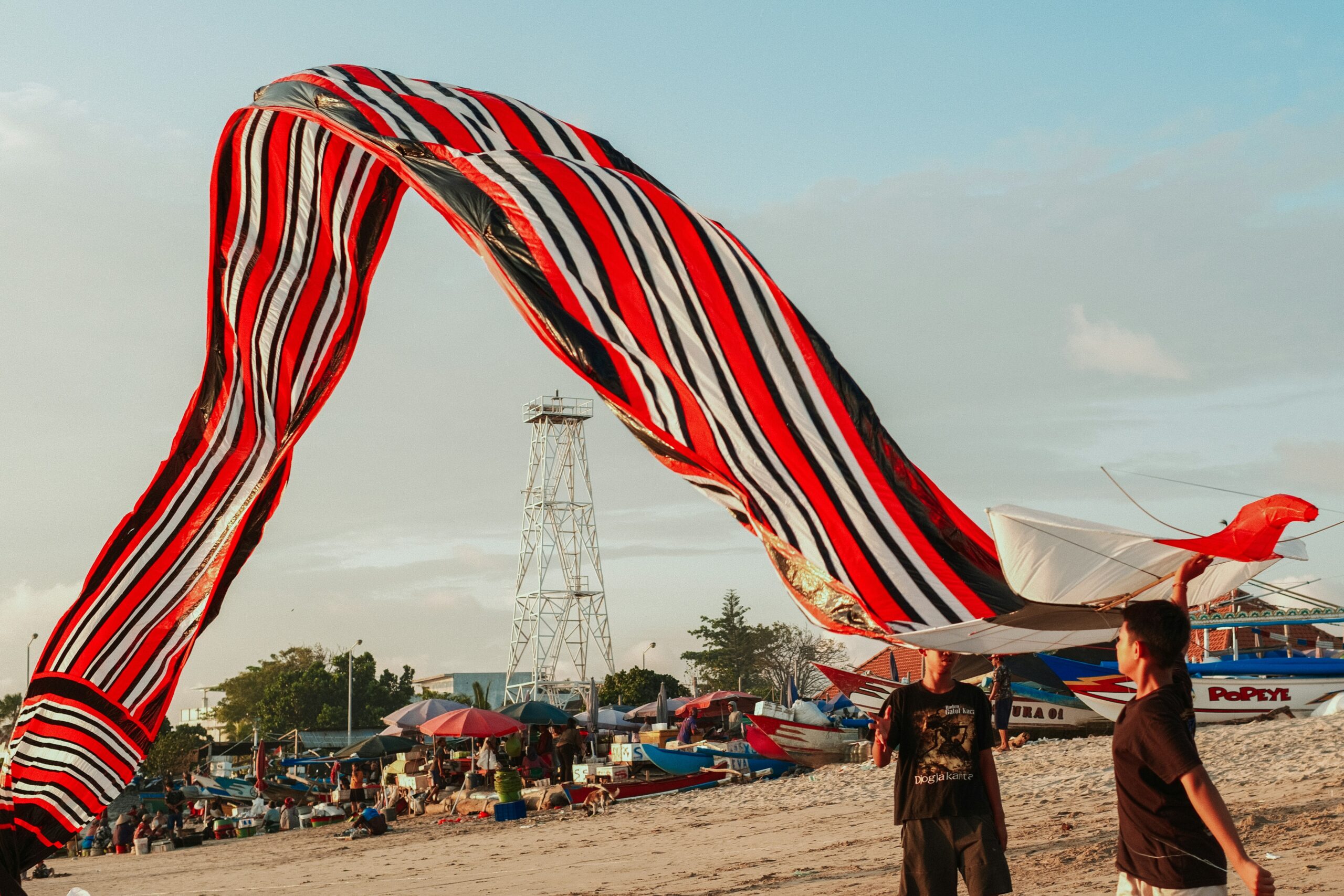
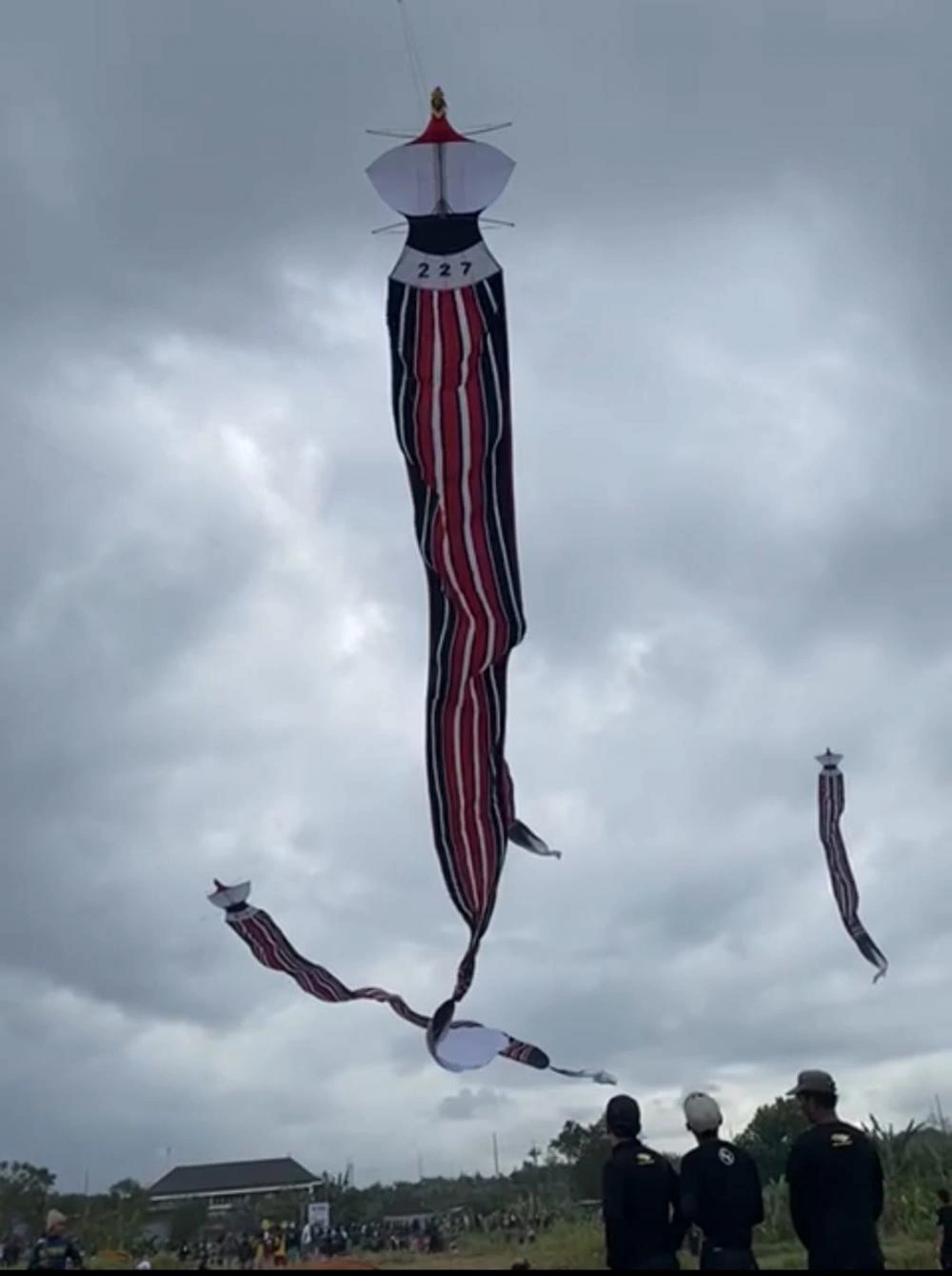
Some kite designs have mythic associations. The dramatic janggan, with a head and an exceptionally long flowing tail, is often linked to dragon or serpent imagery. Interpretations can vary between groups, and not every kite should be treated as a sacred object.
Before a major launch, a team may make offerings or pray for safety and favourable wind. Competition and enjoyment coexist with these gestures of respect. The festival is therefore neither simply a sporting event nor a formal temple ceremony.
How the Celebration Evolved
As materials and construction knowledge improved, kites grew to dimensions requiring large teams. Cotton or synthetic cloth joined traditional paper, while carefully selected bamboo remained central to many frames. Transporting a giant kite through narrow streets became a procession in itself.
Competition categories developed around established forms and newer creative designs. Sound also became important. A vibrating bow called a guwang can give a kite a deep humming voice in flight, while accompanying musicians energise the team on the ground.
Photography and social media have widened the audience, but the strongest identity still belongs to the sekaa layangan. Months of collective work may be invested in a flight lasting only minutes.
How It Is Celebrated Today
Festivals and competitions are usually scheduled during the dry, windy period, commonly between June and August, though the season can extend beyond those months. Padang Galak near Sanur is closely associated with major events, but organisers may use other open grounds.
Teams arrive with kites, flags, musicians and supporters. Judges may consider launch quality, stability, flight angle, design and teamwork. Wind conditions shape the timetable, so pauses and delays are normal.
Outside formal events, visitors may see smaller kites across beaches and rice fields. This everyday presence is an important part of the tradition and explains why the festival feels locally rooted rather than staged solely for tourism.
Traditions and Rituals
Three classic forms dominate many competitions. The bebean resembles a broad fish with a split tail. The curved pecukan is often compared to a leaf and can be demanding to control. The janggan has a striking head and a long tail that ripples far behind it.
Teams build the frame, stretch the covering, paint or appliqué the surface, rig the lines and test the balance. On flying day, coordinated runners lift the structure while line handlers respond to shouted instructions. Musicians and supporters turn the launch into a communal performance.
Small offerings may be placed near a kite before flight. Visitors should never step over them or interfere with lines and equipment.
What Visitors Can Expect
Expect heat, wind, loud music and periods of waiting followed by sudden action. A launch can be thrilling, with dozens of people running as a huge kite catches the air. Teams may move quickly through the crowd when wind shifts or a kite descends.
Facilities vary. Some gatherings have food stalls and designated viewing areas, while smaller competitions may offer little shade or seating. Events can be postponed when weather is unsuitable, even if a date has been widely advertised.
Travel Tips
Confirm the venue and schedule shortly before travelling. Arrive early, bring sun protection, water and footwear suitable for uneven or dusty ground. Keep well behind team lines and follow directions from marshals.
Never touch a kite, rope or reel without permission. Flying lines can move at speed and cause serious injury. Do not stand directly downwind of a launch or landing area. Roads near the field may be congested, so arrange a practical drop off point and allow extra time.
Interesting Facts
- Bebean, pecukan and janggan are the best known traditional forms.
- Some janggan tails extend for extraordinary distances behind the main kite.
- A sekaa layangan is a community kite group responsible for far more than the final flight.
- A humming kite bow can create a resonant sound in the wind.
- Competition schedules depend heavily on weather and safe flying conditions.
Conclusion
The Bali Kite Festival transforms seasonal wind into a celebration of craft, cooperation and imagination. Its scale is spectacular, but its meaning lies equally in bamboo selection, shared labour, offerings and the trust required to launch a giant form into the sky. By observing safety boundaries and accepting the wind’s unpredictable timetable, visitors can enjoy one of Bali’s most exhilarating community traditions with respect.