
Date : June 2027
Location : Bali
Time : –
Introduction
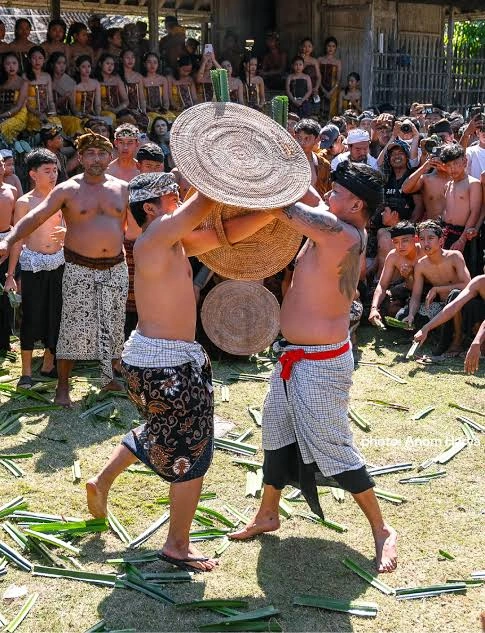
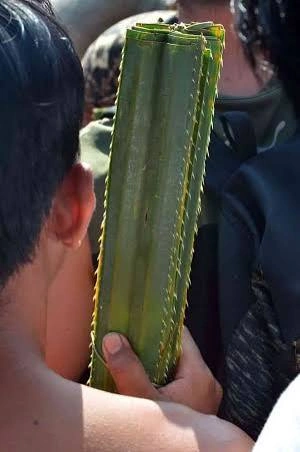
In the ancient village of Tenganan Pegringsingan, pairs of men face one another holding thorny pandan leaves in one hand and woven rattan shields in the other. At a signal, they grapple and strike in a brief ritual contest before separating with smiles and mutual respect. This is Perang Pandan, also known as Mekare-kare or Mageret Pandan. The tradition forms part of Usaba Sambah, an important ceremonial period in Tenganan’s local calendar, and honours Indra, revered by the community as a warrior deity. Although the combat can leave visible scratches, its purpose is not hostility. Perang Pandan expresses courage, discipline, devotion, and communal identity within one of Bali’s best-known Bali Aga villages.
Historical Origins
Tenganan Pegringsingan preserves a customary system distinct from many other Balinese villages. Often described as Bali Aga or Bali Mula, its community maintains inherited laws, religious practices, spatial organisation, and ceremonial cycles with deep local roots.
The exact age of Perang Pandan cannot be verified. Community tradition connects it with devotion to Indra and with stories of struggle against the powerful ruler Mayadenawa. Different versions circulate, and these narratives should be presented as mythology rather than documented political history.
Perang Pandan developed within the wider Usaba Sambah ceremonies rather than as an independent combat festival. Its continuation depends upon Tenganan’s customary institutions and the participation of villagers who understand its obligations.
The tradition became increasingly known to outsiders during the growth of cultural tourism in Bali. Its dramatic appearance attracted photographers and visitors, but its meaning remains rooted in Tenganan’s ritual calendar.
Mythology or Religious Significance
Indra occupies a particularly important place in Tenganan’s religious tradition. Associated with courage, protection, rain, and warfare, he provides the spiritual focus for ritual combat.
Perang Pandan is often described as an offering of blood to Indra. The scratches caused by thorny pandan may produce small amounts of blood, symbolising courage and devotion. This should not be confused with uncontrolled violence or a contest intended to seriously injure an opponent.
The combat also teaches composure. Participants accept discomfort, follow ritual rules, and finish without lasting hostility. Strength is measured through courage and self-control as much as physical force.
Some popular accounts describe the event simply as a coming-of-age ceremony. While young men take important roles and learn community responsibilities through participation, interpretations and eligibility follow Tenganan’s own customary practice. It is safer to understand it as a communal religious tradition with educational and social dimensions.
How the Celebration Evolved
Perang Pandan was historically an internal village ceremony. Today, organised viewing areas and scheduled sessions help manage the substantial number of visitors who may arrive during Usaba Sambah.
Photography and tourism have made the tradition internationally recognisable. This attention can support local livelihoods and cultural awareness, but it also risks separating the combat from the prayers, offerings, music, dress, and social obligations that give it meaning.
The community retains authority over timing, participation, and ceremonial rules. Public schedules may change according to customary decisions. Tenganan is not a museum, and Perang Pandan is not performed daily for visitors.
Alongside the combat, visitors may encounter other elements of Tenganan culture, including ritual swings, traditional architecture, music, and the renowned double-ikat geringsing textile.
How It Is Celebrated Today
Perang Pandan is held during Usaba Sambah, usually over more than one session according to Tenganan’s local calendar. The precise Gregorian dates change annually and should be confirmed close to the event.
Participants wear traditional cloth and carry a bundle of thorny pandan leaves together with a round woven shield. Two opponents enter the ceremonial space and face one another under the supervision of an official.
Each bout is brief and close-range. Participants attempt to strike or rub the pandan against the opponent’s back and shoulders while using the shield for protection. Music intensifies the atmosphere as successive pairs take their turn.
Afterwards, scratches are treated with a traditional preparation, commonly described as using turmeric and other ingredients. Former opponents sit together, reinforcing that the contest ends without resentment.
Traditions and Rituals
Preparation for Perang Pandan belongs to the larger ceremonial life of Tenganan. Offerings, prayers, community organisation, prescribed clothing, and the village calendar all shape the occasion.
The pandan and shield create a deliberate balance between attack and protection. The contest requires participants to move close together, making courage inseparable from trust.
Traditional music accompanies the combat. Tenganan is particularly associated with selonding, an ancient iron-keyed ensemble used in sacred contexts, although the exact musical arrangements depend upon the ceremony.
The ritual is followed by care rather than triumphal humiliation. Treating wounds and sharing food or companionship restore the participants’ relationship. The sequence demonstrates that conflict can be contained within rules and returned to harmony.
What Visitors Can Expect
Tenganan Pegringsingan is in Karangasem, eastern Bali. On Perang Pandan days, the village can become extremely crowded, with limited parking and narrow viewing areas.
Visitors may hear announcements and music before the bouts begin, but ceremonial timing can be fluid. Waiting is part of the experience. The best vantage points are not always available, and spectators must never enter the combat space.
The visible scratches can be confronting. Visitors should approach them within the community’s religious context and avoid sensational photographs focused only on blood.
From Tejaprana in Ubud or Tegallalang, the journey requires substantial travel time. An early departure and a knowledgeable local guide can make the visit more respectful and practical.
Travel Tips
- Confirm dates through a reliable Tenganan or Karangasem source shortly before travelling.
- Arrive early and expect congestion, limited parking, and extended waiting.
- Wear modest clothing and follow village dress requirements.
- Stay within public areas and never cross into the combat space.
- Do not touch ceremonial equipment or ask to handle the pandan weapons.
- Request permission before close photography and avoid flash.
- Do not photograph injuries in a demeaning or sensational way.
- Consider visiting with a guide familiar with Tenganan’s customs.
- Support local crafts respectfully and ask before photographing artisans or homes.
Interesting Facts
- The tradition has several names. Perang Pandan is also known as Mekare-kare or Mageret Pandan.
- The shield is woven from rattan. It protects participants during short, close-range bouts.
- Opponents do not remain enemies. Wounds are treated and relationships return to harmony after combat.
- It belongs specifically to Tenganan. Perang Pandan is not a general Balinese Hindu ceremony.
Conclusion
Perang Pandan turns combat into an expression of devotion, courage, and community discipline. The thorns and shields create its dramatic appearance, but the ritual’s deepest lesson emerges afterwards, when opponents sit together and hostility disappears. Within Usaba Sambah, each bout honours Indra and renews Tenganan’s relationship with its ancestors, laws, and inherited identity. Visitors who see only a fight miss the tradition’s essential balance. Perang Pandan is ultimately about controlled strength, mutual trust, and the restoration of harmony after conflict.
Sources Checked
- Tenganan cultural tradition references in Yunitasari et al., 2018: https://www.iiste.org/Journals/index.php/JPCR/article/download/42541/43809
- Karangasem Regency Government: https://www.karangasemkab.go.id/
- Indonesian cultural heritage portal: https://budaya.data.kemdikbud.go.id/
- Tenganan Pegringsingan customary and village information, cross-checked against academic cultural studies.